
Is Homemade Butter Chicken Worth It? (Spoiler: Yes, Yes It Is)
We have made a basic curry before, so we’re not total n00bs when it comes to cooking Indian food. But we wanted to see if we could make a more complex curry. And since we’ve recently been experimenting with homemade naan, we figured butter chicken would be the perfect thing to pair with some garlic naan.
We’re doing this post “recipe review” style, so we’ll be breaking down the recipe we used and what we thought!
Why Is Butter Chicken Called Butter Chicken?
You’d think it’d be because there is a lot of butter in the recipe right? Right. That’s what we thought. But when we were researching, most recipes only called for 2-3 tbsp of butter or ghee. (Like this one, this one, and this one.) That isn’t an egregious amount.
“It is served in a mild curry sauce that includes butter.”

Next time we make butter chicken, we’re going to try increasing the butter. Is there such a thing as too much butter? We’ll find out! (Or maybe that’s the secret to restaurant-style butter chicken.)
Is Butter Chicken Spicy?
Not typically. At most restaurants we’ve been to, butter chicken has been pretty mild. But every restaurant is different, so ask before you order!
When it comes to homemade butter chicken, we added one deseeded green chili, but go wild if your spice tolerance is higher than ours.
“We’re not bitches, we’re just white.”

How to Make Butter Chicken
We made this beginner-friendly recipe for butter chicken by Tea for Turmeric.
Ingredients
Marinade
3 tbsp plain, whole-milk yogurt, preferably Greek
1 tsp mild Kashmiri chili powder or paprika
1/2-1 tsp red chili powder or cayenne
1 tsp coriander powder
1 tsp cumin powder
1/4 tsp turmeric powder
1/4 tsp garam masala, or store-bought Tandoori Masala
1/4 tsp dried fenugreek leaves (kasuri methi), crushed
1 tsp kosher salt, use less for sea salt
1 tbsp neutral oil, such as grapeseed or avocado
1 tsp lemon or lime juice
1/2 tsp garlic paste, optional
1 – 1.25 lb chicken breast, thighs, or tenders, cut into 1.25"/3.75cm cubes
Butter Chicken Sauce
1 14 oz can whole peeled tomatoes (no salt added), OR 2/3 cup store-bought tomato purée
1 tbsp salted butter or ghee, for cooking the chicken
4 tbsp neutral oil, divided
1 small (~150 g) yellow onion, finely chopped
5-6 garlic cloves, finely chopped
1- inch piece ginger, finely chopped
1 tsp Kashmiri chili powder or paprika
1 tsp cumin powder
1/2 tsp coriander powder
1/2 tsp red chili powder or cayenne
2 tsp kosher salt, use less for sea salt
2 tbsp tomato paste
Final Touches
4 1/2 – 5 tsp sugar
2/3 cup heavy whipping cream, plus more for drizzling on top
2 tbsp salted butter
1/2 tbsp dried fenugreek leaves (kasuri methi), crushed
3 tbsp finely chopped cilantro*
*Cilantro tastes like soap, so we didn’t add it as a final touch to our dish.
If this is your first time making any sort of Indian cuisine, this might seem like a lot. But the complexity of flavour is worth it.
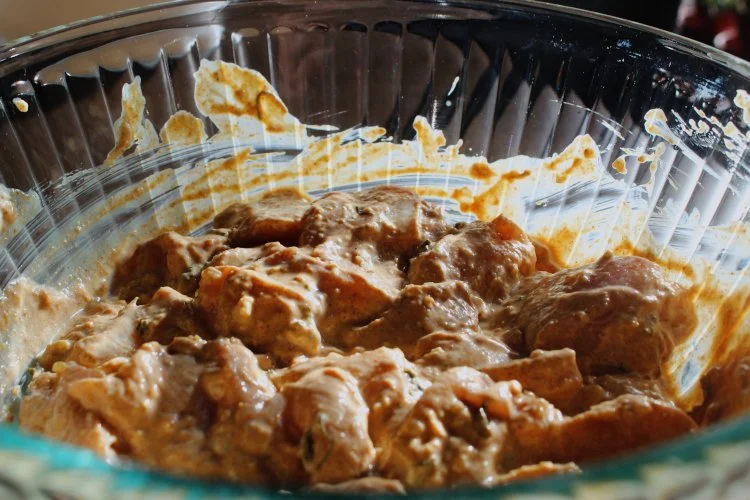
For the marinade, you’re going to want to mix everything but the chicken together in a bowl, and then add the chicken, and mix so that the marinade is coating the chicken pieces. Cover it and put it in the fridge for at least an hour, but overnight would be best.
Start cooking your onions. When they have started to brown, add in the ginger and garlic and let that cook out. When everything is cooked and aromatic, add in your spices to activate them.
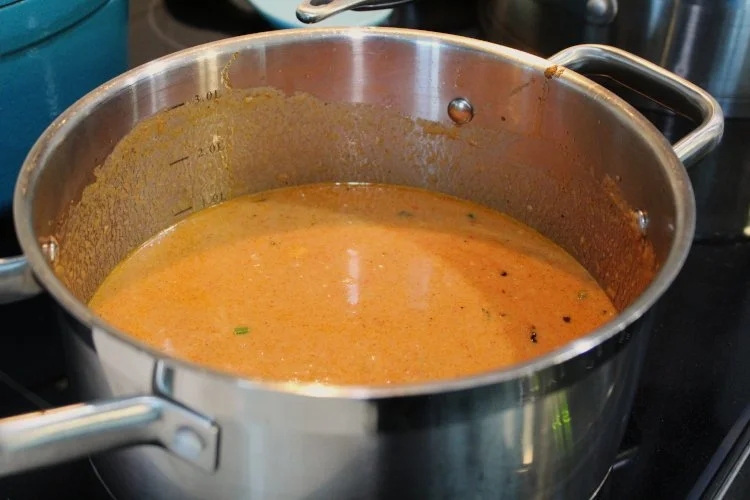
Add your pureed tomatoes and tomato paste and let that cook out until you can start to see the oil and fats beginning to separate on the top of the curry.
Lower the heat and let the curry gravy simmer to develop its flavours.
While the sauce is simmering, cook your chicken. You’re going to want to use a cast iron or stainless steel pan with some oil to prevent sticking. You also want to make sure that the pan is h o t to get a nice crust on the chicken (if you need to, cook the chicken in batches)
When the chicken has cooked, add it into the curry gravy and let everything simmer together for about 10 minutes to let the flavours mingle and develop.
Finally, pour in the cream, add the butter and fenugreek leaves, and take off the heat. Make sure to taste everything for seasoning. If you need to cut some more acidity, add some sugar. Top with cilantro if it doesn’t taste like soap to you. (Congrats, we’re jealous.)

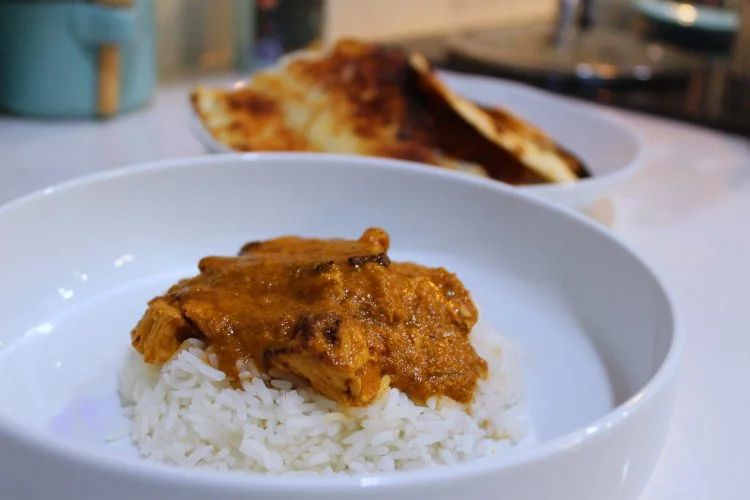
We should have taken a picture of a big bowl of butter chicken, sans rice!
How to Make Restaurant-Style Butter Chicken
Here are some upgrades you can make so your butter chicken turns out closer to how a restaurant makes it:
Marinate the chicken overnight instead of for an hour. The salt and yogurt will make the chicken juicer (and therefore, more delicious).
Swap chicken breasts for thigh meat. This one is more of a “whatever you prefer” type thing. Thighs stay juicier and are harder to overcook, but breast is what most restaurants that we’ve been to use.
Use Kashmiri red chili powder instead of paprika — it has a mild heat that regular paprika doesn’t have.
Use cashew cream AND regular cream. Apparently most restaurants use both. This tip is based on a few internet comments, please comment below if you have insider knowledge!
Strain the tomato/onion puree before you add your chicken, as this will give it a smoother texture. Or you can try to immersion blender it so you don’t have little pieces of onion or chili, and they are completely incorporated into the sauce. If you do this, make sure that you fish out any whole spices first (ask us how we know).
Add whole spices. Take a cinnamon stick, a few green cardamom pods, and some cloves sizzle in the butter before the sauce goes in. Fish them out before serving. (You do not want to bite into a cardamom pod, again, ask us how we know.)
Add some butter or cream at the end for an even more rich flavour. The butter will also give it a nice finishing sheen.
Cook the chicken in a tandoor. Yea this one is probably not doable for most people. But if you have a way to smoke the chicken, do it. You could also try broiling your marinated chicken at the end.
That’s our list of tips! What are we missing?
But What About the Boxed Stuff?
It was okay. We were both incredibly skeptical as to whether the packet would even turn out given the lack of everything required.
What do you mean you only need 120g of tomatoes and 100g of onions? For the same quantity of chicken in the “real” recipe we needed five times more tomato. And then you add water. How much water? ¯\_(ツ)_/¯
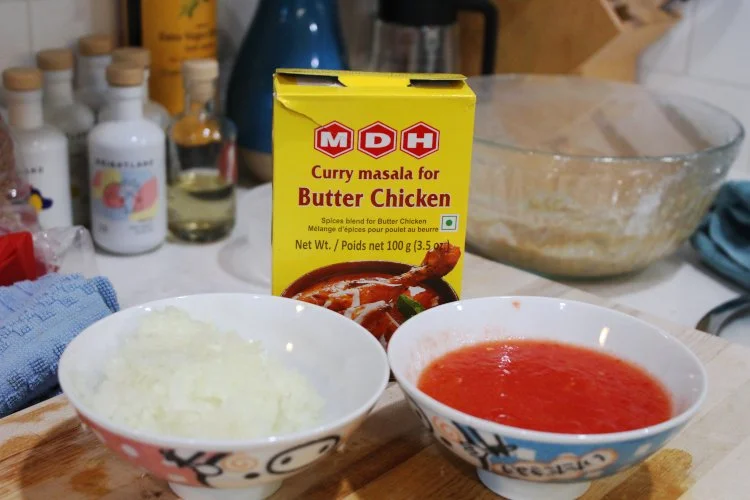
In the end the whole thing did come together, and it tasted fine. But it was just one note, and gave more generic curry vs butter chicken specifically. It was vastly inferior to the homemade version.
Oddly, the mix did not include kasuri methi (fenugreek leaf) which is typically in butter chicken. So it also loses points for that.
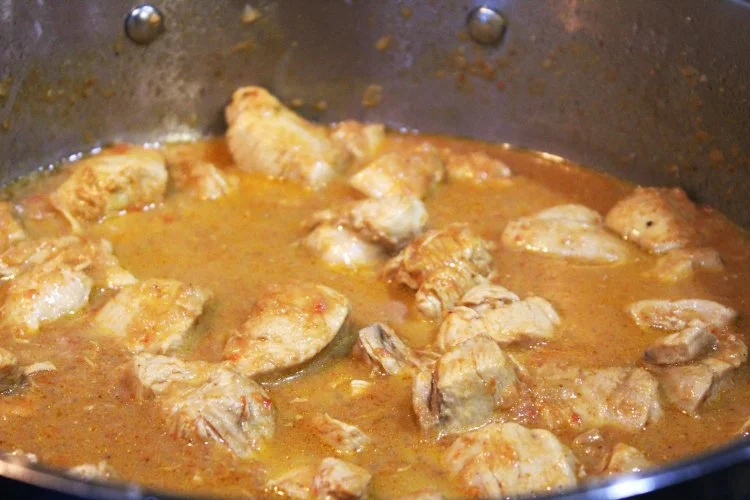
If you’re reaching for the boxed stuff, just buy take out instead. It’s going to be roughly the same price, and will taste better.
But What About the Jarred Stuff?
The jarred stuff is somehow even more one note than the boxed stuff. It’s passably alright.
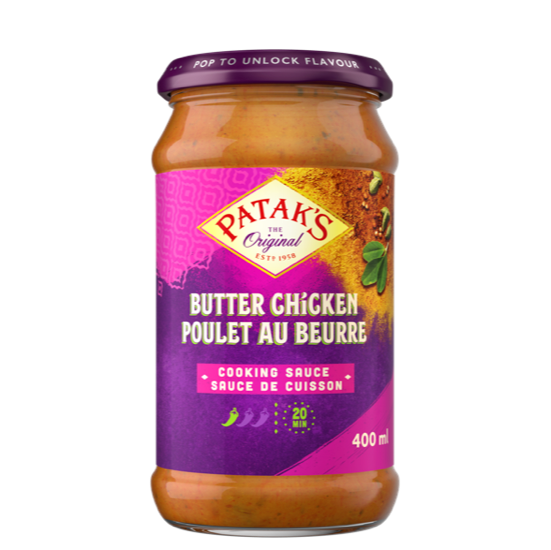
If you happen to live in Edmonton and the area, you should check out Ramneek Singh — he’s reviewed just about every butter chicken in the city. Find the best butter chicken near you!
Mediocre Hot Take
Rice is awesome, but naan is the superior carb for curries. That is all.

Love butter chicken? Let us know your favourite restaurant in the comments below! Maybe we’ll go there one day with all of the blog money we make. /s
Mediocre Rant
So, we were fully planning on showcasing the recipe that we actually used the day of to make butter chicken, as we typically do for these types of posts. We are firm believers in citing sources and not taking credit for something that isn’t ours. Y’know, being good writers and internet citizens.
But.
When we went to copy/paste the ingredients list, we found that the website is running a JS script that intercepts and blocks right clicks. We did end up figuring out how to work around that, however we don’t want to be sued (even though recipes aren’t typically copyright-able). So, to avoid any headaches, we used a similar recipe, though notably not the same recipe we used on the day of. We will be making the butter chicken linked earlier in this post another day and will let you know how it compares to the original one we made!